Author Name
Bourbon Rising
How America’s Native Spirit Went from Cornfields and Speakeasies to the World Stage
Before dawn, in a Kentucky parking lot, people shiver in line for a bottle they probably won't be allowed to buy. The object of their devotion is corn whiskey—cheap, common, and for most of a century dismissed as your grandfather's drink. So how did it become a relic worth stealing?Bourbon Rising rewinds two and a half centuries to answer that question. From a frontier of cornfields and copper stills, it follows bourbon through a tax revolt, the river that carried it to the world, the fraud that forced the law to guarantee its honesty, the thirteen dry years of Prohibition that nearly killed it, the slump that made it unfashionable, and the Tokyo bars that fell in love with it before America did.Serious about the facts, suspicious of the legends, and very good company. Come for the bourbon; you'll accidentally learn American history.
What You Will Learn From The Book
How did a barrel of frontier corn whiskey become a thing people line up overnight to revere, lie to obtain, pay fortunes to collect, and occasionally steal?
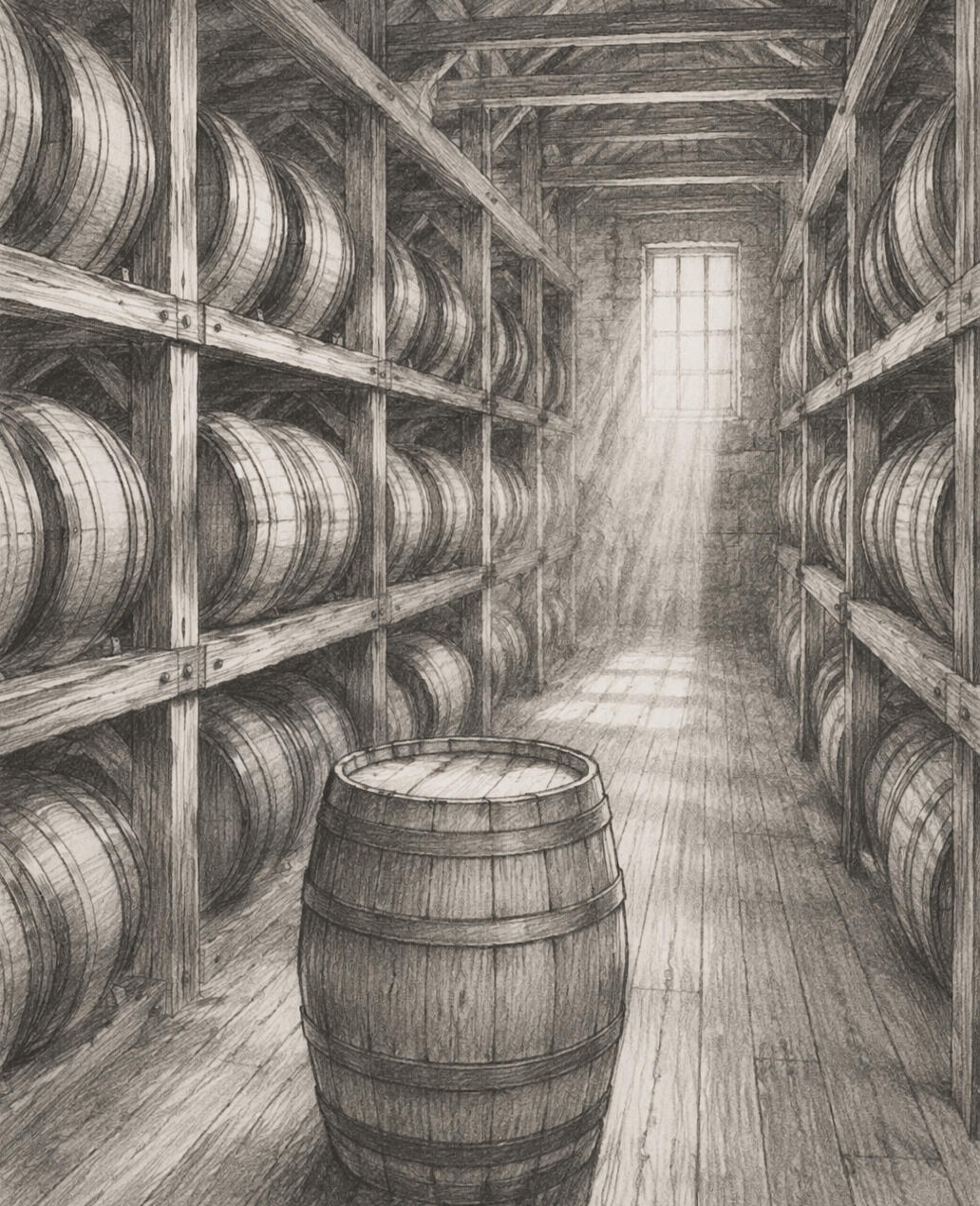
Before dawn, in a parking lot in Kentucky, people are shivering in line for a bottle they almost certainly won't be allowed to buy. They've driven through the night. Some have flown in. The object of all this devotion is corn whiskey — made from one of the cheapest crops on the continent, aged in a wooden barrel, and for most of the twentieth century considered the brown stuff your grandfather drank. Bourbon Rising begins with that strange, glittering scene and then asks the only question worth asking: how on earth did we get here?To answer it, the book rewinds two and a half centuries — to a contested frontier of cornfields and copper stills, before anyone thought to call the stuff bourbon at all. What follows is the full, surprising, often comic story of how a frontier necessity became a global obsession: settlers turning surplus grain into something they could sell, a tax revolt that put whiskey and defiance in the same glass, a river that carried Kentucky's whiskey to the world, a chemist who made it taste the same twice, the hucksters and barons who gave it brands, the fraud that forced the government to step in as the guarantor of honesty, the thirteen dry years that nearly killed it, the postwar slump that made it unfashionable, the Japanese bars that fell in love with it before America did, and the modern mania that turned bottles into trophies, investments, and crime-scene evidence.This is narrative history with a drink in its hand — serious about the facts, suspicious of the legends, and very good company. Bourbon is one of the few products whose identity was repeatedly shaped by law, and one of the few American stories that runs straight through rebellion, commerce, Prohibition, decline, reinvention, and globalization. Bourbon Rising follows all of it, from a log-cabin still to a trade-war tariff, and shows how, again and again, bourbon turned a crisis into an identity.


Along the way you'll learn: - Why bourbon happened in Kentucky — and why "real bourbon can only be made there" is a beloved myth, not the law. - Who really "invented" bourbon (spoiler: probably no one, and the marketing needed a hero anyway). - How a single 1897 law made authenticity part of the product — and why "bottled-in-bond" still matters. - Why Prohibition nearly destroyed bourbon but handed it a priceless story of survival. - How Japan helped rescue an American spirit that America had given up on. - How scarcity became the most valuable thing a distillery makes.
You came for the bourbon. You'll accidentally learn American history. By the last page you'll understand that bourbon didn't simply rise. It survived, adapted, regulated itself, told better stories, crossed oceans, came home with a Japanese accent, learned to charge more, and somehow became America in a glass.
Pour something. Start with the parking lot.
Chapters
Chapter 1 — The Myth Machine. The book opens in the present, in the cold, in the lottery lines and secondary markets and outright thefts that have turned rare bourbon into an object of pilgrimage. Through the cult of Pappy Van Winkle, the headline-making "Pappygate" heist, and the collector economy that treats bottles like art, this chapter shows that bourbon is no longer just a drink — it's a myth machine, where the story can be worth nearly as much as the whiskey. Then it asks the question that powers the rest of the book and rewinds to a frontier where none of this existed yet.Chapter 2 — Fire, Corn, and Limestone. Back to the 1770s and 1780s, to the practical logic that made bourbon possible. Corn grew easily and rotted fast; whiskey was how you turned a perishable surplus into something storable, sellable, and worth the trip to market. Add limestone-filtered water, swinging seasons, and settlers who already knew how to run a still, and a distinctly American whiskey was waiting to happen. The chapter enjoys the founding legends — Elijah Craig, Evan Williams — and then gently checks their IDs at the door.Chapter 3 — Whiskey Rebels. Whiskey was barely born before the new federal government tried to tax it, and the frontier answered with a revolt. With Hamilton's excise, Washington riding out at the head of an army, and farmers who saw the tax as tyranny, this chapter makes a tax fight feel like the political drama it was — and traces how whiskey and defiance got poured into the same glass, an argument between bourbon and the government that never quite ends.Chapter 4 — Down the River. A spirit is only as big as its market, and Kentucky's market arrived in 1803 with the Louisiana Purchase. Flatboats and then steamboats carried barrels down the Ohio and Mississippi to New Orleans, bourbon's first big stage, where Kentucky whiskey met the wider world and may have done some of its best aging in transit. The river is the chapter's true character — and a quiet rehearsal for the global shipping lanes to come.Chapter 5 — The Name in the Barrel. Where did "bourbon" come from? The honest answer is a delicious mystery, and this chapter refuses to fake a tidy solution. Bourbon County barrel markings, the romance of Bourbon Street, the slow drift of commercial usage — the competing theories are part of the pleasure. What's clear is that a place-name became a category, and a category became an identity worth protecting, a thread that runs all the way to a 1964 act of Congress.Chapter 6 — The Alchemy of Consistency. Folk craft becomes reliable product. Through Dr. James C. Crow and the sour-mash method, the hydrometer, and the rise of the rickhouse, this chapter explains — in plain, jargon-free terms — how bourbon learned to taste the same twice. Crow is a genuinely fascinating figure, and the chapter resists the urge to make him a wizard: he perfected and popularized the science rather than inventing it from nothing. Consistency, it turns out, is what makes a brand worth trusting.Chapter 7 — The Bourbon Barons. Now the brands arrive, and with them the characters: a salesman who sold whiskey sealed in glass so doctors could trust it, a self-promoting colonel, immigrant brothers building an export name. This is business history with swagger — the moment bourbon stopped being anonymous barrels and became names, lore, and loyalty. The venerable labels born here are the ones that will later have to survive Prohibition.Chapter 8 — Boom, Fraud, and the Gilded Guzzle. Scale is the hero and the villain. After the Civil War, railroads and industrial stills made bourbon bigger than ever — and made it easier to fake, cut, and color cheap spirit into something sold as aged whiskey. With the Whiskey Trust squeezing the market and rectifiers flooding it, this chapter shows how bigness bred both fortune and fraud, and set the stage for the law to step in.Chapter 9 — The Whiskey Ring. A political thriller in a bottle. In 1875, a tax-fraud ring reaching into the Grant administration turned whiskey into the currency of corruption — until a determined Treasury secretary and a wave of raids brought it down, even as it touched the president's own circle. The chapter keeps the verdict on Grant honestly open, and shows why a scandal about taxes became a crisis about trust — the same tax-and-whiskey argument from the frontier, in a new costume.Chapter 10 — The Bottle of Truth. This is the chapter where the law becomes the unlikely hero. The 1897 Bottled-in-Bond Act made the federal government the guarantor of whiskey's honesty: one distillery, one season, four years in a bonded warehouse, bottled at 100 proof, nothing added but water. The chapter makes a statute genuinely dramatic, and draws the straight line from a green tax strip in 1897 to every "single barrel" and "authenticity" claim on shelves today.Chapter 11 — Stirred with Sugar. Bourbon gets a social life. Through the Old Fashioned and the cocktail culture of the late 1800s, this elegant interlude shows bourbon entering polite society — while cheerfully separating fact from the famous Pendennis Club origin story (a legend first printed decades later). It's the chapter that explains why, every time cocktails come back into fashion, bourbon is waiting at the center of the revival.Chapter 12 — Thirteen Years of Drought. The book's emotional center. Prohibition padlocked the distilleries, scattered the families, and nearly erased a century of craft — survived only through a handful of "medicinal" licenses, a black market, and sheer stubbornness. The chapter treats the catastrophe with the gravity it deserves and the absurdity it can't avoid, and shows how the dry years handed bourbon something it couldn't buy: a story of scarcity and survival that still powers the mania in Chapter 1.Chapter 13 — The Phoenix in a Barrel. Coming back was not glamorous. After Repeal in 1933, an aging industry had to rebuild from rubble — relaying bricks, scrounging aged stock, blending young whiskey to meet a thirsty market, and submitting to new federal standards. This chapter captures the grit of resurrection and the consolidation that shaped the modern industry, as a few determined families and firms dragged bourbon back to life.Chapter 14 — Smooth Operators and Changing Tastes. Mid-century bourbon is glamorous with a shadow at its edge. Through wartime distilleries turned over to industrial alcohol, Madison Avenue cool, a famous red wax seal, the Derby's silver julep cup, and bourbon's brushes with the silver screen, this chapter follows a spirit that became a cultural symbol — even as the tastes that would soon abandon it were already shifting. It's the story of an icon outliving its own fashion, for now.Chapter 15 — Red, White, and Bourbon. In 1964, Congress declared bourbon "a distinctive product of the United States," giving it a legal identity to rank beside Scotch and Cognac. The chapter makes the law readable and human, untangles the popular phrase "America's Native Spirit" from what the 1964 measure actually said, and savors the irony: bourbon was canonized as a national treasure at almost the exact moment Americans began trading it for vodka.Chapter 16 — Bourbon on the Rocks. The fall. Vodka and clear spirits surged, bourbon became "your grandfather's drink," distilleries closed, and warehouses filled with whiskey nobody wanted. This crisp, slightly melancholy chapter makes the decline vivid and explains why it happened — while introducing the stubborn few who kept making excellent whiskey in an empty market, and setting up the rescue that arrived from an unexpected direction.Chapter 17 — Big in Japan. The most surprising chapter in the book. As America turned its back, Japan fell hard for bourbon — in Tokyo bars with cowboy-hatted bartenders and "bottle-keep" shelves of personalized bottles, fed by importers and a thirst for premium, well-aged American whiskey. Japan didn't single-handedly save bourbon, but it threw a lifeline and, crucially, became the mirror that let bourbon see its own premium potential before America rediscovered it.Chapter 18 — Bluegrass Gold. Commodity becomes collectible. With the single-barrel and small-batch pioneers of the 1980s, a handful of distillers bet that drinkers would pay more for older, stronger, rarer, better-told bourbon — and won. This chapter explains single barrel, small batch, and barrel proof in plain language, and shows how scarcity, once a hardship, became a strategy that points straight back to the mania that opened the book.Chapter 19 — The Pilgrimage. After the global chapters, the book comes home. The Kentucky Bourbon Trail turned production into experience and consumers into pilgrims, drawing visitors from around the world to smell the mash, tour the rickhouses, and dip a bottle in wax. Warm and observant, this chapter shows bourbon becoming a place you travel to, not just a bottle you buy — and reconnects the worldwide phenomenon to the cornfields where it began.Chapter 20 — Bourbon Without Borders. The culmination. Exports top a billion dollars, a Japanese giant buys an American icon, and then bourbon turns up where no one expected it — as a pawn in a transatlantic trade war, hit with retaliatory tariffs precisely because the world had come to love it. Expansive and reflective, this chapter shows bourbon as American soft power, ties the global trade fight back to the frontier tax revolt, and asks whether a spirit can scale to the world and keep its soul.Epilogue — What the Barrel Remembers. A short, warm, clear-eyed close that returns to the opening question and the lone barrel breathing in a quiet rickhouse. It gathers the book's threads — corn, water, the barrel, law, rebellion, scarcity, Kentucky, and the widening world — into a final reflection on a truth the whole book has been pouring: bourbon's power lies not only in what's inside the bottle, but in the stories Americans and the world keep pouring into it.
About The Author
Eleodor Sotropa has spent his career in technology, where the job is mostly the same as the job of a good historian: figure out how a complicated system actually works, then explain it to someone who wasn't in the room. Bourbon Rising turns that instinct loose on America's native spirit - a drink whose story runs straight through rebellion, law, fraud, Prohibition, decline, and a very strange global comeback.He came to bourbon the way most people do: a single good pour, a question he couldn't shake, and a growing shelf he can no longer fully account for. The research took him into statutes, archives, and the occasional rickhouse. The writing tried to keep the proof and leave out the marketing smoke.
"Bourbon Rising began with a simple, slightly embarrassing question: how did a cheap corn whiskey end up as something people line up overnight to buy? Answering it took me two and a half centuries back and a fair distance down the Kentucky Bourbon Trail."

Last Call To Action!
Enim neque volutpat ac tincidunt vitae. Molestie at elementum eu facilisis sed.